
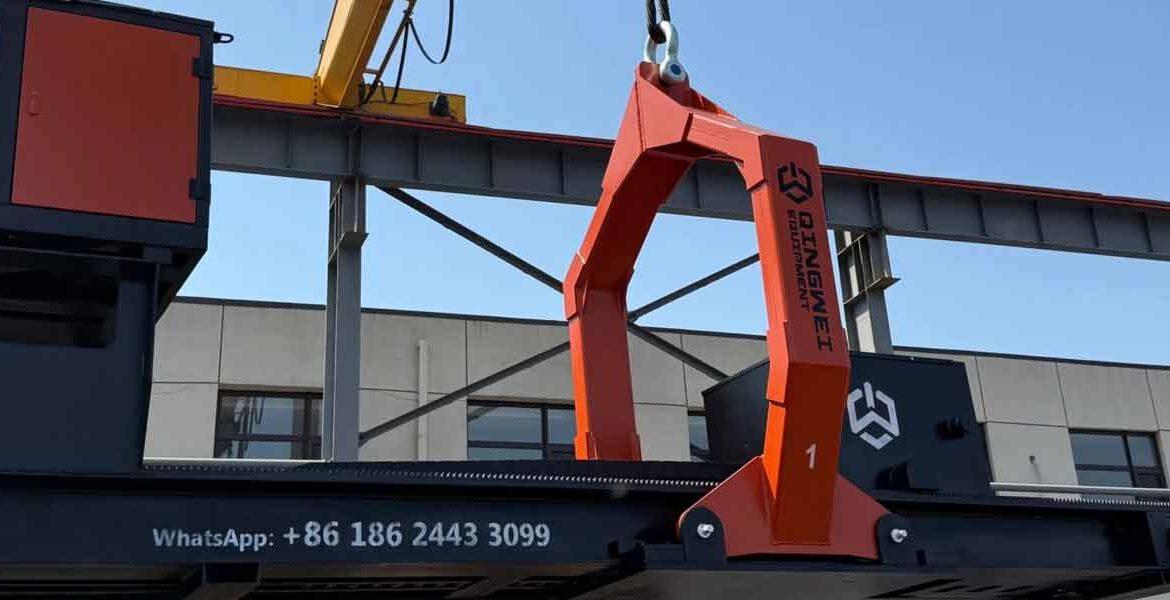
Heat exchanger maintenance is a critical part of refinery, petrochemical, and industrial plant operation. When tube bundles need to be removed for inspection, cleaning, or repair, choosing the right heat exchanger bundle extractor is essential for safety, efficiency, and project success.
A bundle extractor, also commonly called a bundle puller, is designed to remove tube bundles from heat exchangers with controlled pulling force and stable handling. However, not every model is suitable for every job. The right equipment depends on several important factors, including bundle size, site conditions, and power availability.
In this guide, we explain how to choose the right bundle extractor for your project.
1. Confirm the Bundle Length
The first key factor is the bundle length. Heat exchanger bundles vary significantly in size, and the extractor must have enough structural length and working stroke to handle the full bundle safely.
Before choosing a model, confirm:
- Total bundle length
- Effective extraction distance
- Available space at the job site
- Whether the operation is indoors or outdoors
If the bundle is longer than standard working ranges, a custom solution or longer extractor structure may be required.
2. Check the Bundle Diameter
The bundle diameter directly affects the frame design, support arrangement, and pulling stability of the equipment.
Larger diameters usually require:
- Wider support structure
- Stronger extraction frame
- More stable guiding system
- Better balance during removal
If the diameter is large, choosing an undersized extractor can reduce safety and make operation unstable.
3. Estimate the Bundle Weight
The bundle weight is one of the most important factors in model selection. It determines the required pulling force and the structural strength of the machine.
When reviewing the project, confirm:
- Maximum bundle weight
- Operating condition of the heat exchanger
- Whether the bundle is difficult to remove due to fouling or deformation
- Safety margin required for heavy-duty extraction
In many refinery and petrochemical projects, actual extraction resistance may be higher than the theoretical weight. Choosing a bundle extractor with sufficient pulling capacity helps avoid delays and operational risks.
4. Decide Between Diesel and Electric Models
One of the most common questions is whether to choose a diesel-powered bundle extractor or an electric-powered bundle extractor.
Diesel Bundle Extractor
A diesel-powered model is more suitable for:
- Outdoor maintenance
- Refinery turnaround projects
- Remote worksites
- Areas without stable power supply
Key advantages include:
- Independent power source
- Strong field adaptability
- Suitable for shutdown and turnaround work
- Better for heavy-duty outdoor service
Electric Bundle Extractor
An electric-powered model is more suitable for:
- Indoor plant maintenance
- Stable operating environments
- Low-noise working conditions
- Continuous and controlled operation
Key advantages include:
- Cleaner operation
- Lower noise
- Stable pulling performance
- Better for indoor and workshop use
In general, diesel models are preferred for field operations, while electric models are ideal for plant maintenance with reliable power conditions.
5. Consider the Working Environment
The working environment has a direct impact on equipment selection. Even if the bundle size is clear, site conditions may still change the recommended model.
You should consider:
- Indoor or outdoor use
- Floor condition and operating space
- Power availability
- Temperature and weather exposure
- Required mobility
- Safety requirements of the plant
For example, a refinery turnaround project often requires a diesel-powered bundle extractor with strong adaptability, while an indoor maintenance area may prefer an electric model with precise control and lower noise.
6. Review the Frequency of Use
If the equipment will be used frequently, long-term reliability and maintenance convenience become more important.
For regular maintenance operations, users should pay attention to:
- Structural durability
- Ease of operation
- Stability of pulling performance
- Maintenance requirements
- Spare parts availability
A well-matched model does not only complete the current project more efficiently, but also improves long-term maintenance performance.
7. Think About Custom Requirements
In some cases, standard models may not fully meet the job requirements. Customization may be needed for:
- Extra-long bundles
- Larger diameters
- Higher weights
- Special site restrictions
- Specific control requirements
- Different rail or support arrangements
An experienced manufacturer should be able to recommend a standard or customized solution based on actual project data.
8. Information Needed Before Quotation
To recommend the right model accurately, the following information is usually required:
- Bundle length
- Bundle diameter
- Estimated bundle weight
- Working environment
- Power preference: diesel or electric
- Project location
- Any special operating requirements
The more complete the information, the more accurate the model recommendation and quotation will be.
Why Choosing the Right Bundle Extractor Matters
The right heat exchanger bundle extractor improves:
- Safety during extraction
- Operating efficiency
- Stability of bundle handling
- Maintenance planning
- Project turnaround performance
Choosing the wrong model may result in unstable pulling, insufficient capacity, higher maintenance difficulty, or unnecessary delays.
Talk to Qingwei About Your Project
Qingwei provides diesel and electric heat exchanger bundle extractors for refinery, petrochemical, and industrial maintenance projects. Whether you are planning a turnaround shutdown, field service operation, or indoor maintenance work, our team can recommend a suitable model based on your actual bundle data.
If you would like model recommendation, simply send us your:
- Bundle length
- Bundle diameter
- Estimated bundle weight
- Working conditions
- Preferred power type
We will help you select the right bundle extractor for your project.