
In refinery, petrochemical, and industrial heat exchanger maintenance, buyers often use different names when searching for the same type of equipment. Some call it a bundle extractor, while others use the term bundle puller, tube bundle extractor, or heat exchanger bundle puller.
Although the wording may be different, these terms usually refer to equipment designed to remove, support, and reinstall tube bundles during shell-and-tube heat exchanger maintenance. Understanding the difference in terminology can help maintenance contractors, refineries, and procurement teams communicate more clearly when preparing technical specifications or requesting quotations.
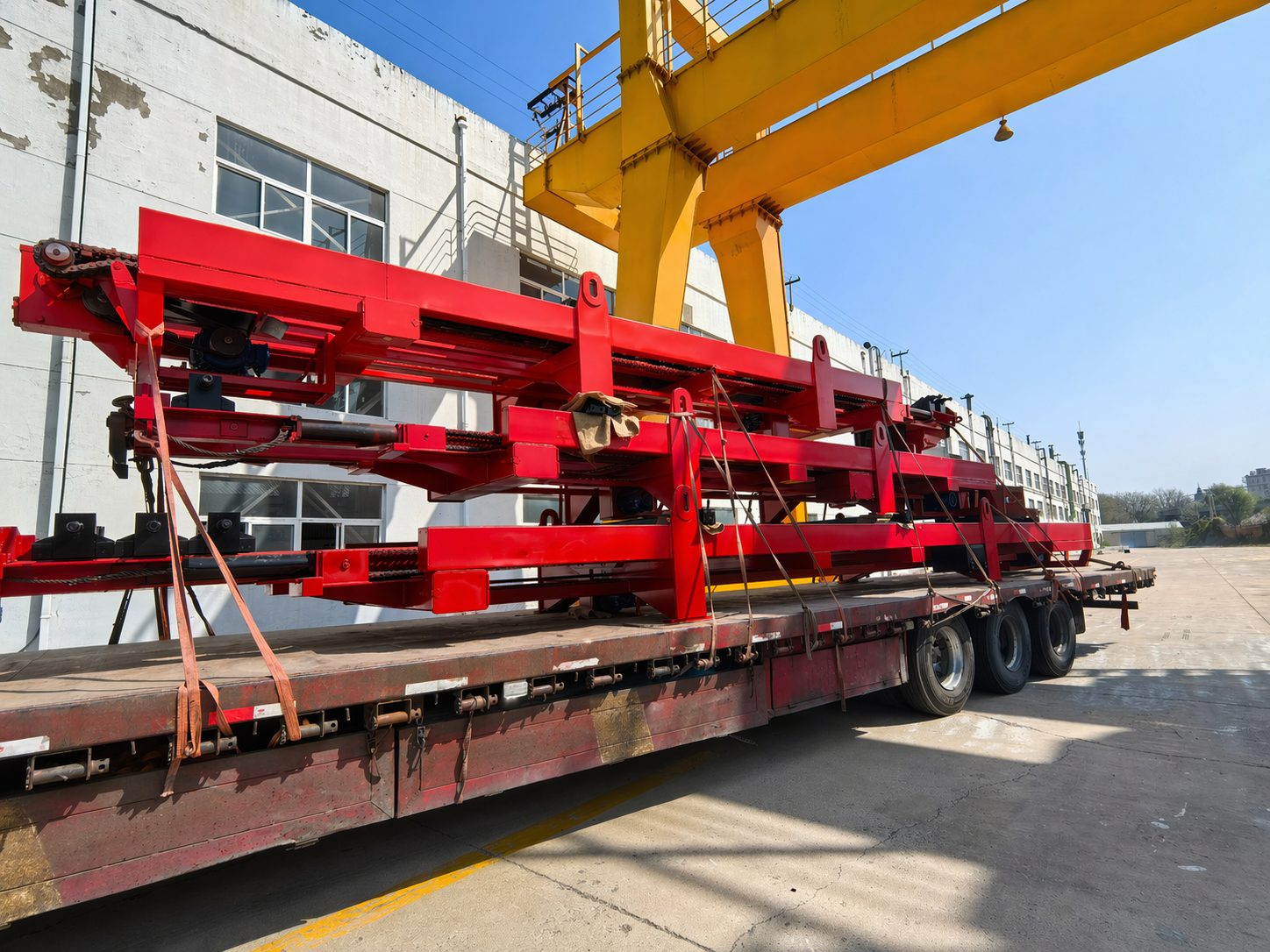
What Is a Bundle Extractor?
A bundle extractor is a specialized machine used to extract tube bundles from shell-and-tube heat exchangers. During refinery turnaround or routine maintenance, the tube bundle often needs to be removed for inspection, cleaning, repair, retubing, or replacement.
Compared with manual pulling methods, chain blocks, or simple lifting tools, a bundle extractor provides a more stable, controlled, and safer method for handling heavy tube bundles. It supports the bundle during extraction and helps reduce uncontrolled movement during pulling and reinstallation.
Typical applications include:
- Refinery turnaround maintenance
- Petrochemical plant heat exchanger service
- Tube bundle removal and reinstallation
- Heat exchanger cleaning preparation
- Industrial shutdown and maintenance projects
- Maintenance contractor rental or field service work
What Is a Bundle Puller?
A bundle puller is another commonly used name for the same type of equipment. In many markets, especially among maintenance contractors and field service teams, the term “bundle puller” is used more frequently because it directly describes the working action: pulling the tube bundle out of the exchanger shell.
The word “extractor” is often used in formal product descriptions, technical documents, manufacturer websites, and quotation specifications. The word “puller” is often used in daily site communication, jobsite planning, and equipment rental discussions.
Bundle Extractor vs. Bundle Puller: What Is the Difference?
For most buyers, there is no major equipment difference between a bundle extractor and a bundle puller. Both are used for removing tube bundles from shell-and-tube heat exchangers. However, the exact configuration may vary depending on manufacturer design, pulling capacity, power source, working length, control system, and site requirements.
Instead of focusing only on the name, buyers should confirm the actual working conditions and technical requirements. This is especially important for refinery and petrochemical projects where bundle weight, working height, access space, and safety requirements can vary significantly.
Important information usually includes:
- Maximum tube bundle weight: including possible fouling, oil sludge, scale, or retained liquid.
- Tube bundle length: the overall length affects machine stroke and working space.
- Tube bundle diameter: this affects saddle support, roller structure, and machine stability.
- Working height: ground-level work and elevated exchanger work may require different operation planning.
- Site access conditions: surrounding structures, pipe racks, platforms, cranes, and road conditions should be considered.
- Power preference: diesel or electric power should be selected according to the site environment.
Where Are Bundle Extractors and Bundle Pullers Used?
Bundle extractors are commonly used in industries where shell-and-tube heat exchangers are critical process equipment. In these environments, safe and efficient tube bundle removal can directly affect maintenance efficiency and shutdown duration.
Common industries include:
- Oil refineries
- Petrochemical plants
- Chemical processing plants
- Power plants
- Fertilizer plants
- Offshore and onshore oil and gas facilities
- Heat exchanger maintenance service companies
For contractors, a reliable bundle puller can also improve service capability. One machine may be used for multiple maintenance projects if the capacity, working length, and site adaptability are suitable.
Diesel-Powered Bundle Extractor
A diesel-powered bundle extractor is suitable for outdoor maintenance, refinery turnaround projects, and remote job sites where external power supply may be limited or unavailable.
Diesel models are often selected for export projects because they provide independent power and flexible field operation. This is especially useful for maintenance contractors who need to move equipment between different project locations.
Typical advantages of diesel models
- Independent power supply for outdoor or remote job sites
- Suitable for refinery and petrochemical turnaround projects
- Flexible movement when stable electricity is not available
- Practical choice for contractors working across multiple plants
- Good adaptability for heavy-duty field maintenance work
Electric-Powered Bundle Extractor
An electric-powered bundle extractor is suitable for plants or workshops where stable power supply is available. Compared with diesel models, electric models can offer lower noise, simpler daily operation, and reduced engine maintenance.
Electric models are often preferred when customers want a cleaner and more straightforward power system. For indoor or semi-indoor maintenance areas, electric power can also be more convenient if the power supply condition is confirmed in advance.
Typical advantages of electric models
- Lower noise during operation
- Cleaner working environment without diesel exhaust
- Simpler power system and easier daily maintenance
- Suitable for workshops, regular plant maintenance, and fixed maintenance areas
- Good choice when stable industrial power supply is available
Why Pulling Capacity Is Not the Only Factor
Many buyers first compare bundle extractors by pulling capacity, such as 25T, 45T, 65T, 85T, 100T, or higher. Pulling force is important, but it should not be the only factor in model selection.
In real maintenance work, tube bundles may be affected by corrosion, fouling, gasket adhesion, deformation, oil sludge, and long service time. These conditions may increase the initial extraction resistance. At the same time, the machine must keep the tube bundle stable during movement.
A good bundle extractor should provide:
- Stable support for the tube bundle
- Smooth and controlled pulling movement
- Reliable hydraulic performance
- Good alignment between machine and exchanger
- Safe operation during extraction and reinstallation
- Adaptability to different bundle sizes and site conditions
For heavy or long tube bundles, uncontrolled movement can create serious safety risks. Therefore, the equipment must not only be powerful, but also stable, rigid, and easy to control.
What Information Should Buyers Provide Before Quotation?
To recommend the correct bundle extractor or bundle puller model, the manufacturer usually needs more than a simple capacity request. Accurate project information helps avoid undersized equipment and improves the reliability of the quotation.
Before requesting a quotation, buyers can prepare the following information:
- Maximum tube bundle weight
- Maximum tube bundle length
- Tube bundle outside diameter
- Heat exchanger drawing or basic layout
- Working height from ground level
- Available operation space around the exchanger
- Power preference: diesel or electric
- Project country and jobsite location
- Any special lifting, transport, or access limitations
If drawings are not available, site photos and basic measurements can still help the engineering team make a preliminary recommendation.
How Qingwei Supports Bundle Extractor Projects
Qingwei manufactures diesel and electric bundle extractor solutions for refinery, petrochemical, and industrial maintenance projects. Our equipment is designed for tube bundle removal, support, extraction, cleaning preparation, and reinstallation work.
We support customers with model selection, technical communication, quotation preparation, export delivery, operation guidance, and after-sales service. For different project requirements, our team can recommend suitable configurations according to tube bundle weight, length, diameter, working height, power condition, and site access.
If you are not sure whether you need a bundle extractor, bundle puller, or customized configuration, you can send us your bundle specifications and project conditions. Our team will help review the application and recommend a practical solution.
Frequently Asked Questions
Is a bundle extractor the same as a bundle puller?
In most cases, yes. The two terms are commonly used to describe the same type of equipment for removing tube bundles from shell-and-tube heat exchangers.
Which term should I use when requesting a quotation?
You can use either term. More importantly, you should provide the tube bundle weight, length, diameter, and site working conditions.
Should I choose diesel or electric power?
Diesel models are usually more suitable for outdoor and remote sites. Electric models are suitable for sites with stable power supply, lower noise requirements, and simpler daily operation.
Is pulling capacity the most important factor?
Pulling capacity is important, but stability, support, alignment, machine rigidity, and control are also critical for safe tube bundle extraction.
Can the equipment be customized?
Yes. Bundle extractor configuration can be adjusted according to tube bundle size, working length, power type, operation requirements, and jobsite limitations.
Conclusion
Bundle extractor and bundle puller are two common names for equipment used in heat exchanger tube bundle maintenance. For buyers, the key is not only choosing the right term, but also confirming the correct model based on actual working conditions.
Before selecting equipment, it is important to review tube bundle weight, length, diameter, working height, site access, power supply, and safety requirements. A well-selected bundle extractor can improve maintenance efficiency, reduce manual handling, and make tube bundle extraction more stable and controlled.
If you are preparing for a refinery turnaround, petrochemical shutdown, or heat exchanger maintenance project, Qingwei can help recommend a suitable diesel or electric bundle extractor model based on your actual project data.