
Diesel Bundle Puller
Suitable for outdoor refinery turnaround work and projects where independent power, flexible field operation and heavy-duty bundle pulling are required.
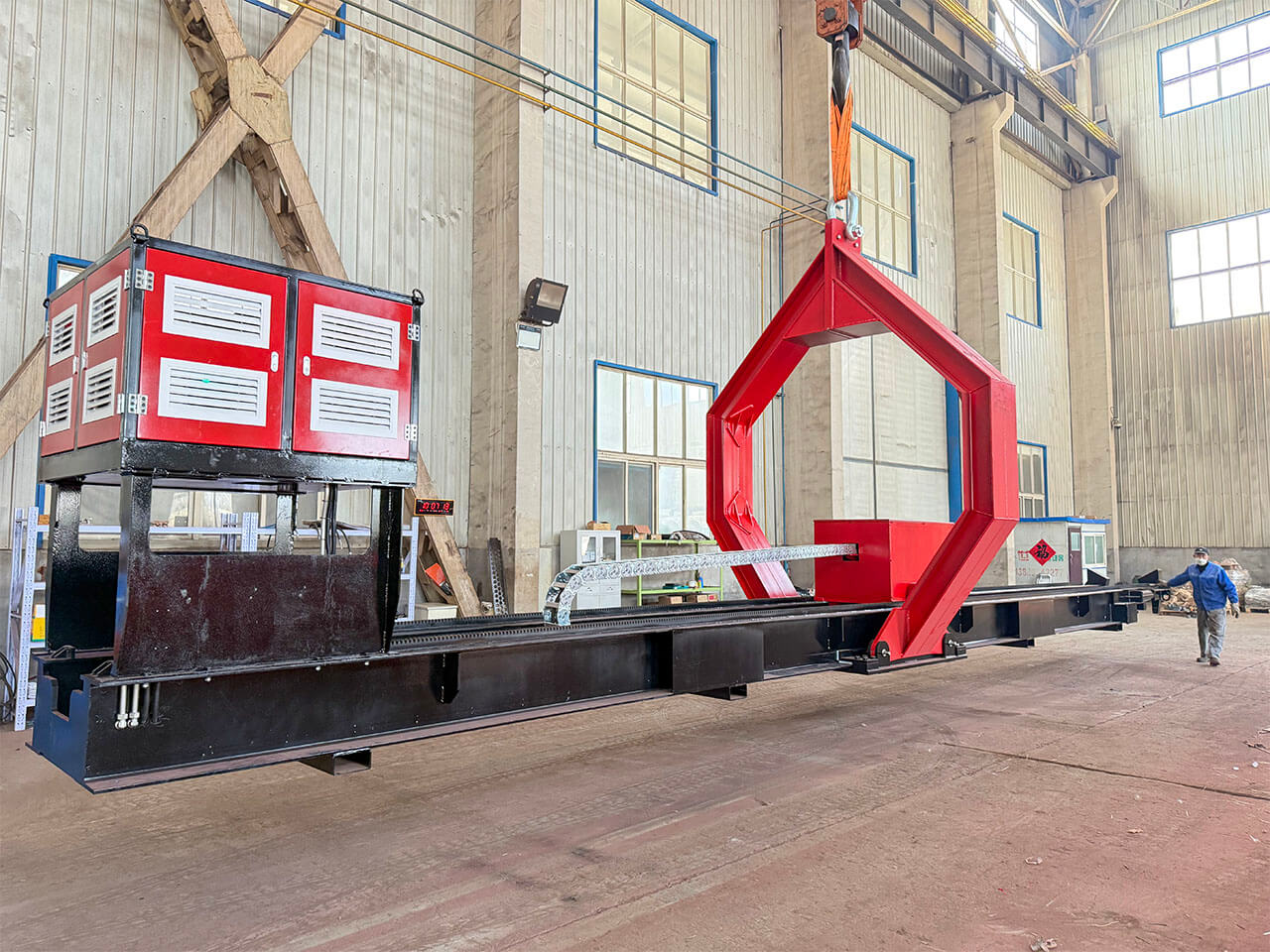
Qingwei manufactures heavy-duty bundle pullers and tube bundle pullers for controlled shell and tube heat exchanger bundle removal and installation. Our equipment is used for refinery shutdown maintenance, petrochemical turnaround projects, power plant heat exchanger service, and industrial maintenance contractors.
Send your maximum tube bundle weight, bundle diameter, bundle length, site access, working height, and preferred power source. We will recommend a suitable diesel or electric bundle puller configuration and provide a quotation.
The correct bundle puller capacity and working length depend on tube bundle weight, bundle diameter, bundle length, exchanger position, site access and shutdown maintenance conditions. Qingwei provides diesel and electric tube bundle puller configurations for refinery, petrochemical and power plant maintenance projects.
Suitable for outdoor refinery turnaround work and projects where independent power, flexible field operation and heavy-duty bundle pulling are required.
Suitable for plant maintenance applications requiring electric operation, lower on-site emissions and stable controlled tube bundle handling.
Working length, front/rear extension, support structure, pulling capacity and control method can be evaluated according to actual heat exchanger site conditions.
| Capacity | Typical Selection Direction | Common Application |
|---|---|---|
| 25T | Smaller tube bundles and routine exchanger maintenance | Compact refinery / plant service jobs |
| 35T / 45T / 50T | Common refinery and petrochemical bundle pulling work | Shutdown and turnaround maintenance projects |
| 65T / 85T | Heavier shell and tube heat exchanger bundles | Petrochemical and power plant maintenance |
| 100T / 125T | High-capacity diesel bundle puller configurations | Large refinery and heavy industrial projects |
A bundle puller should be selected according to the real site condition, not only by the rated pulling force. Bundle weight, bundle length, diameter, working space, crane arrangement, power supply and initial extraction resistance all affect the final recommendation.
Share the tube bundle weight, length and outside diameter so the machine structure, support position and pulling capacity can be matched correctly.
Diesel models are suitable for outdoor turnaround sites without stable power. Electric models are cleaner and quieter for workshops or plant areas with reliable power supply.
Scaling, sludge, corrosion and long-term adhesion can increase the initial extraction resistance. Site photos and exchanger drawings help us recommend a safer configuration.